Clearing the Way for BLVD NEXT
By Adrianne Murchison
Publish Date: July 16, 2025
As demolition crews prepare to dismantle the former Atlanta Medical Center, their focus is clear: do it right — and do it responsibly.
The team tasked with dismantling the massive Old Fourth Ward campus is addressing more than just steel and concrete. They’re addressing critical environmental and community concerns that come with it.
“We’re eliminating anything that could harm the environment or our neighbors.” said Barry Roberts, founder of Trinity Green and Atlanta Demolition.
Before founding his demolition firm, Roberts spent years as an environmental trial attorney — experience that now shapes every decision he makes on the job site.
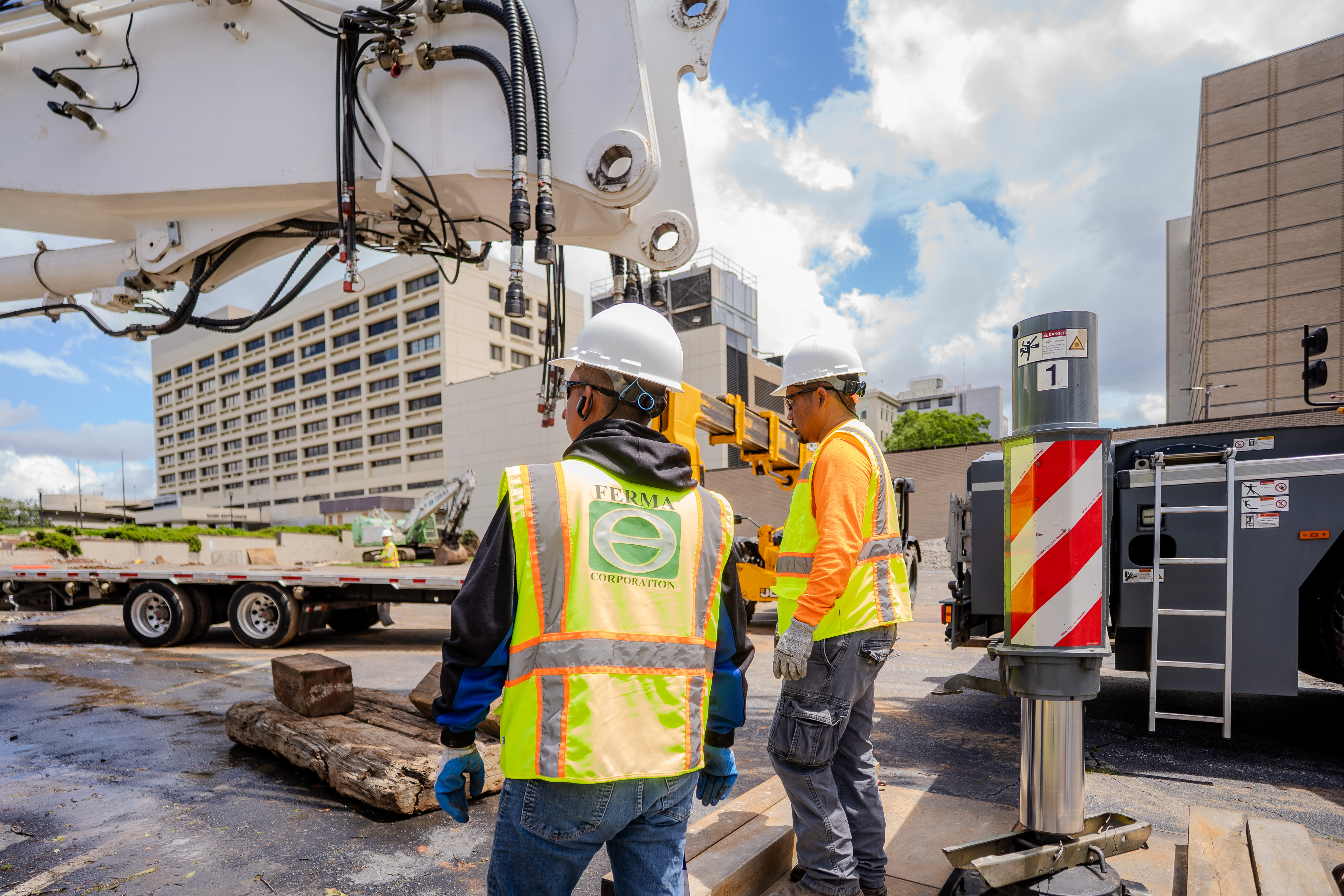
Roberts is leading local demolition efforts at the former Atlanta Medical Center campus in partnership with Ferma Corporation, the national demolition firm contracted for the project.
The work is part of redevelopment by Integral Group, hired by Wellstar Health Systems to transform the 22-acre site into a mixed-use district. Plans include commercial space, residential living— including affordable commercial and housing options — as well as green space, and health and wellness components.
Roberts has handled several high-profile demolitions across the city over the years, including Roosevelt Towers at Georgia Tech and the Children’s Health Care of Atlanta tower at the North Druid Hills campus.
For Ferma, a firm known for demolishing large industrial structures across the U.S., the former Atlanta Medical Center marks the company’s first Atlanta project.
“I tell people that demolition is about as much fun as a man can have because you get paid to break things,” Roberts said. “It’s a very dynamic business. Operations are rarely the same from day to day.”
He added, “Projects of this size have a lot of moving pieces. Doing it in a manner that is both community and environmentally sensitive is sometimes a challenge, but also satisfying when it all comes together,” Roberts said.
The former trial attorney, who grew up in the mountains of North Carolina, views his work as a continuation of his lifelong focus on environmental responsibility.
At the former hospital campus, crews have already found and removed a significant amount of asbestos from the buildings and will be removing asbestos-based paint on one tower’s exterior, Roberts said. Other environmentally materials requiring careful removal include hydraulic elevator oil and fuel oil for standby generators.
“Anything that could contaminate the environment must be removed prior to actual demolition,” Roberts said.
You have to make it safe before you make it go away, he explained.
Demolition will unfold in carefully planned phases, with the most intensive stage spanning roughly eight months.
Towering at 161 feet, Ferma’s demolition excavator — one of the largest in the country — will lead the charge. It will be used alongside other methods to safely dismantle the buildings.
More than 95% of building materials will be recycled, including materials donated to local charities, concrete crushed on-site for reuse and metals recycled for future projects.
“As we take the buildings down, we will process and crush the concrete on site, or for use on our site and other projects around town,” Roberts said.
To Roberts and Chad Maddock, director of national operations for Ferma, strong community relationships and transparency is as vital as technical precision.
“We talk to neighbors. We go to meetings. We answer questions, and we address concerns. That’s how trust is built,” he said.
A public kickoff event on June 30 will mark the official start of demolition and give the community a safe and visible way to witness it.
“We make sure everyone who wants to see what we do, can see what we do — safely and up close — but from a safe distance,” Roberts said.


Let’s Connect
Have questions about BLVDNEXT? Want to learn more about opportunities for residents or businesses? Need to share your thoughts about the project? We’re here to listen.