
One Contemporary Gallery: A cultural gem in Old Fourth Ward
By Adrianne Murchison
Publish Date: July 22, 2025
At a recent Afrofuturism panel, Kenyan-born artist Grace Kisa described a warrior woman armed not with weapons, but with the symbolism of legacy and protection.
Drawing on African roots and the cosmic imagination of U.S. sci-fi — from Bootsy Collins’ psychedelic funk to “Star Trek’s” Lt. Uhura — Kisa and fellow artists at One Contemporary Gallery were reflecting on their contributions to the Afrofuturism exhibit.
The storytelling on display has helped define One Contemporary as a rising cultural art space in Atlanta’s Old Fourth Ward.
Curator Faron Manuel opened the Edgewood Avenue space last January. Spread across two floors in an older building, there’s a fresh, contemporary vibe with polished hard wood finishes accented by cream-colored walls. The gallery offers room for events while also allowing visitors to wander and simply sit and reflect, or engage in conversation.
Manuel, 32, is intentional about bringing together artists and community members of all ages.
“A lot of times, people from my generation have this modernist philosophy, like we’re making something totally new,” he said. “But in reality, we’re often standing on the shoulders of people who were innovative in different ways.”
A former grant manager at the High Museum, Manuel oversaw more than $1 million in Mellon curatorial fellowships.
His art-world immersion began in eighth grade, apprenticing under photographic artist Sheila Pree Bright. Artist Kevin Sipp, featured in the Afrofuturism show, has also been one of his mentors.
As a student at Clark Atlanta University, Manuel curated his first exhibition under the guidance of Tina Dunkley, then director of the university’s art museum.
The April panel explored afrofutures shaped by spirituality, resilience, and Black culture. The exhibition featured a collaboration between Kisa and Maurice Evans, alongside Sipp’s work, which draws on musicians and Japanese tattoo traditions.
Coined by writer Mark Dery in 1993, the term “Afrofuturism” has since been explored by scholars and artists. In 2010, scholar Dr. Alondra Nelson described it as a way of imagining the future — blending themes of alienation with dreams of a more utopian world as reflected in such artists as Janelle Monáe and the late musician Prince.
In their mixed-media series, Kisa and Evans photographed women adorned in light costumes, kanga wraps, bangles, and hairstyles evoking the crown of a warrior or queen.
“When there’s a warrior, it’s not necessarily about combat,” Kisa said. “It might be about protection as you travel from space to space. I didn’t want the warrior to be conventional with a spear because they’re beyond that. It’s futuristic.”
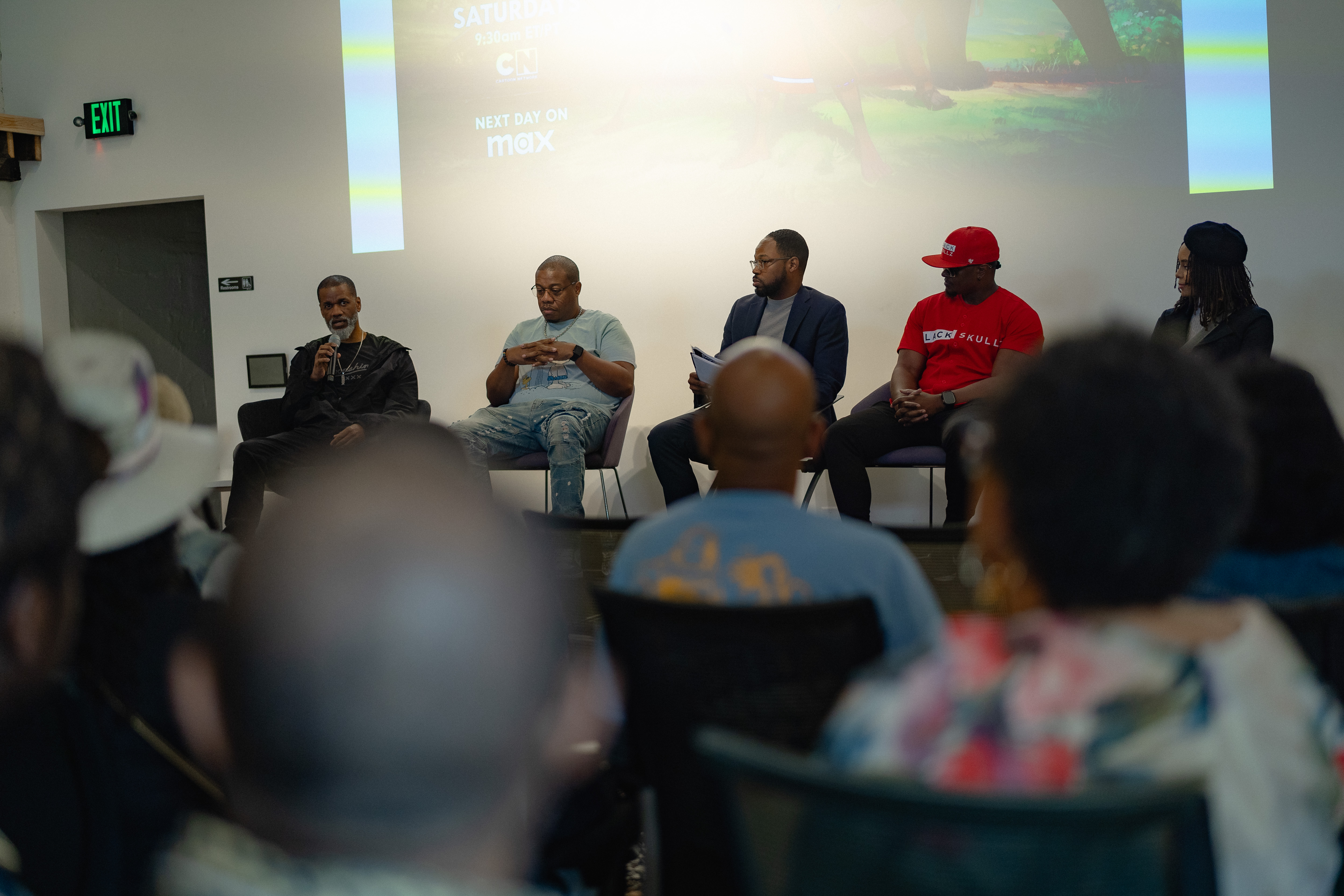
Recently, the gallery hosted a screening and panel with the creators of ‘Iyanu,” a Cartoon Network series following the journey of an orphan girl. For Manuel, events like this highlight his vision: showing how artists shape not only gallery walls, but media and pop culture.
Manuel has studied sculpture and drawing. He believes art professionals should explore mediums outside their own discipline.
“You can get an understanding of how difficult some mediums can be and what artists are doing at a very high level,” he said.


Let’s Connect
Have questions about BLVDNEXT? Want to learn more about opportunities for residents or businesses? Need to share your thoughts about the project? We’re here to listen.