Parades: Civic joy in motion
By Adrianne Murchison
Publish Date: September 30, 2025
To Chantelle Rytter, parades are public alchemy – turning ordinary streets into places of shared wonder and joy. They create a culture where play is sacred, joy is shared and everyone is included.
Her vision rises to new heights with Where the Weird Things Are, a new tradition in Historic Old Fourth Ward Park.
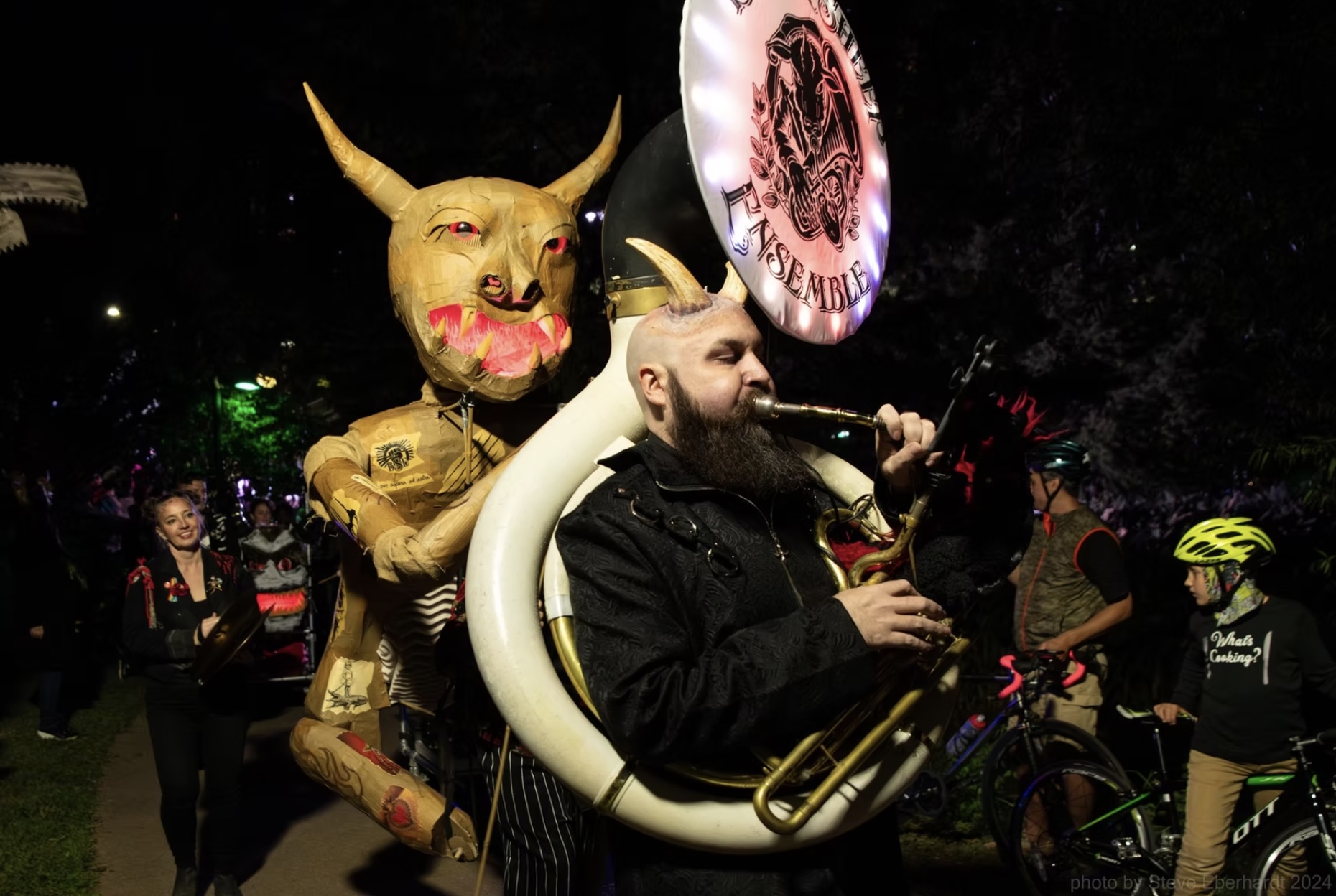
Dubbed an ‘upside down’ Halloween parade, the event invites the public to wander through a whimsical world of stationary floats featuring monsters, creatures and costumed characters with immersive storytelling, the whimsical soundscape of the Black Sheep Ensemble, and surprises throughout.
This year’s event takes place on Oct. 25
Rytter is best known as founder of the Atlanta Beltline Lantern Parade which she leads with her Krewe of Grateful Gluttons, and Black Sheep Ensemble band. In 2022, the starting point of the parade moved from Old Fourth Ward Park to Adair Park on the Atlanta Beltline Southwest Trail.
Atlanta Beltline Art currently funds both that parade and Where the Weird Things Are, Rytter said.
The Beltline Lantern Parade has inspired a growing family of parades that Rytter helms from Sandy Springs to Hilton Head Island and beyond.
Among her proudest moments is the 2023 arrival of Little Amal – the 12-foot puppet Among her proudest moments is the 2023 arrival of Little Amal symbolizing a Syrian refugee child and human rights at Old Fourth Ward Park. Amal has traveled the world. In the field at Old Fourth Ward Park, more than 100 volunteers welcomed her, each holding handmade monarch butterflies floating above.
Here, Rytter shares a glimpse into what it takes to bring a magical parade to life.
Q: Share more about Where the Weird Things Are?
A: We wanted to try something new, an upside down parade. The band and the giant puppets that we make and anyone that wants to participate are inhabiting the area around the pond. People are invited to come and walk through it with all of the creatures. And the music of the Black Sheep Ensemble. Part of it, too, is gifting. Tiny gifts are given from the monsters to the people, and the people to the monsters. We came away [laughing] saying ’The monsters need pockets.’
Q: This feels almost impossible to pull off. How did you do it?
A: I can’t help but think that it met a need. People like it. I think we have a deep soul craving to be part of collective joy. When you get a taste of that, you don’t want to live any other way.
Q: Story telling is a part of Where the Weird Things Are?
A: Collecting stories of the creatures is part of the project. So, I wrote and read stories … just to get it started, but I intend to run a short fiction contest that hopefully we can collect stories, and grow that and [create even more] creatures. I want there to be a collection of local lore and legend from here. Spooky stories about creepy things, the weird things that live here.
Q: How did parades start to become a passion for you?
A: I built my first parade float in the eight grade. I moved to New Orleans … and I didn’t think about Mardi Gras or the parade culture there, so it just like spun my head around. I did not know you could do this! I feel like [parades are] such a special combination of art and civics. And the way that creative play is a gift to a city and how people can personally contribute to the cultural character of the communities that they live in, I think that is important. I think we have a common calling to delight one another — and parades are how we answer that call.
“Parades are a special combination of art and civics,” Rytter said. “They let us shape the cultural character of our communities, one joyful step at a time.”


Let’s Connect
Have questions about BLVDNEXT? Want to learn more about opportunities for residents or businesses? Need to share your thoughts about the project? We’re here to listen.